Why Planting In Fall Is Often The Better Call
I've been looking over my garden with a critical eye lately. There are some things I want to change. Nothing major, just some tweaks here and there. Mostly filling in some gaps.
Notably, I still have five lavender Hebes purchased in early July patiently waiting in ever tighter containers to be put in the ground.
Fortunately, timing is on my side.
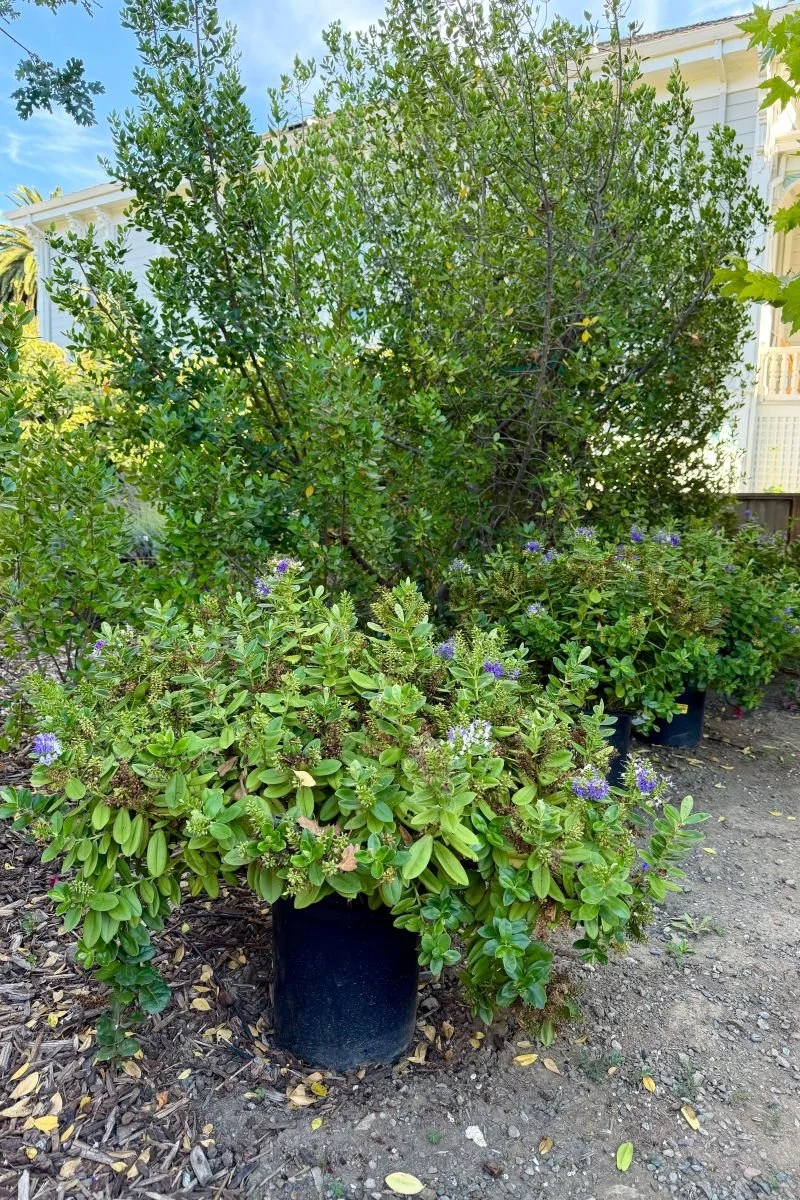
My Hebe × andersoniis patiently waiting to be planted.
Most people think of spring as planting season. For a lot of gardens, fall is the better call.
Hear me out - this isn't just me justifying my planting procrastination, promise.
Here's why fall planting can be your best bet:
Soil temperatures are warm from summer while air temperatures have cooled. This means roots stay active while the vegetation above faces less stress and less moisture loss.
Spring planting asks a young plant to root and bloom at the same time just as heat stress begins to crank up.
Summer planting often puts tender plants into survival mode to deal with hot, dry conditions.
But (there’s always a “but”) the specifics shift depending on where you garden.
Warm Climate Fall Planting (approx. Zones 7–10)
In warmer climates like The West Coast and Southwest, fall means the first rains after months of often zero rainfall. Fall turns into a mild, wet winter, so moisture stays frequent without severe cold.
By the time spring arrives, plants are already settled in and ready to grow, instead of starting from spring-planting scratch.
Cold Climate Fall Planting (approx. Zones 3–6)
Roots need about six to eight weeks of unfrozen soil before the first hard frost to get established. What changes by climate is when that clock starts.
In warmer parts of this range, the first hard frost might not arrive until sometime in November, so you can plant well into fall.
In Zone 5 or colder, first frost often lands in early-to-mid October, which puts the planting deadline around mid-to-late August. If that's you, consider this your last call for the season.
In Zone 3 or 4, frost can arrive by mid-September, which means that window has closed, and spring is genuinely the better bet this year.
Evergreens are the one exception here. They lose water through their foliage all winter, and once the ground freezes, they can't replace it, so in cold climates those are better left for spring planting.
This is why plant-planning ideally happens now rather than when the leaves start turning, let alone waiting until leaves start leafing out.
If you want help figuring out your planting plan before this season’s window closes, I have a few design consultation spots open this month.
— Tina