How to Budget a Landscape Design Project (Without Costly Mistakes)
TL;DR: How to Budget a Landscape Design Project
To budget a landscape design project, start with a clear design plan before building. Set a realistic budget, prioritize layout and infrastructure first, include a 10–20% contingency, and plant last to avoid overbuilding or overplanting. Designing once and building in phases helps control costs and prevent expensive rework.
If you’re planning a garden or landscape renovation and want to avoid wasted money and regret, you’re in the right place. 🌳
Let me start by saying this: you’re probably already doing the right thing just by thinking about the budget before anything gets installed.
Outdoor projects can be a bit quirky. They feel flexible because you can always:
Add/fix/cut back plants later. Expand the patio later. Add lights later. (Just pound a few box store solar lights into the soil - they won't go askew and provide next to no light…😆)
But that perception of flexibility is exactly why so many garden renovations end up over budget, disjointed, or full of “I wish we’d done that differently” moments.
I’ve seen it over and over again - and I’ve made a few of those mistakes myself.
This post will walk you through how to budget a landscape design renovation in a way that actually supports the garden you want to live with long term while enhancing the value of your property - without overbuilding, overplanting, or spending money twice.
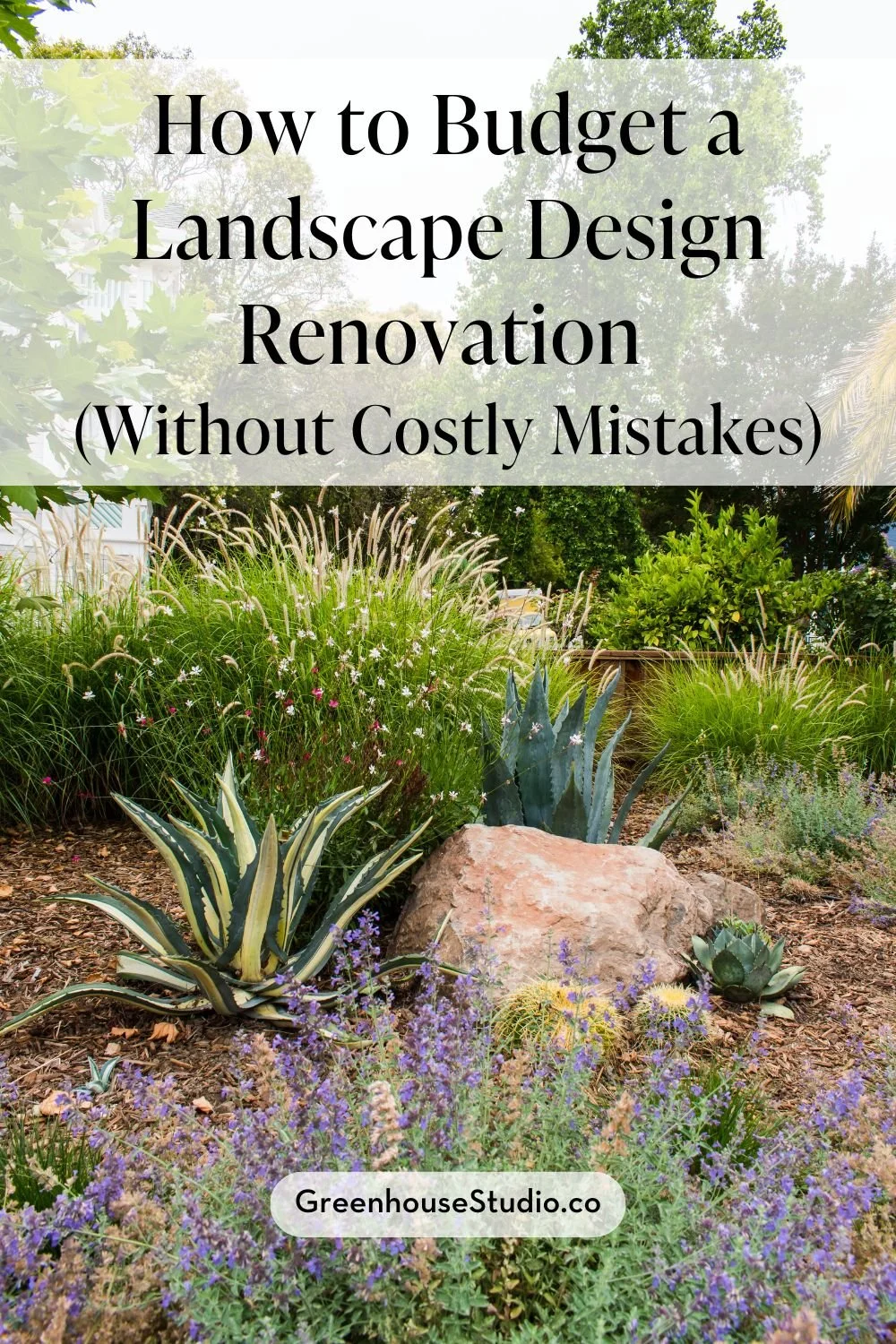
Garden design project: Tina Flint Huffman, Greenhouse Studio
Landscape ROI Is (Often) Better Than Interior Remodel ROI
Before diving into numbers, it helps to reframe how return on investment works for landscape and garden design.
Billionaire Charlie Munger (Warren Buffet’s partner) once said:
“If You Want To Add Value To A Home, Invest In Lush Landscaping — Spend Money On Trees And You Get It Back Triple”
— Charlie Munger

Billionaire Charlie Munger stating that if you want to add value to a home, invest in landscaping, and you'll get it back triple.
That might sound surprising if you’re used to kitchen and bathroom remodel math, however, it makes a lot of sense if you stop and think about it.
Landscape construction is generally much simpler and less costly than interior renovations, yet it is often poorly executed for the reasons covered in the post’s opening paragraph. This means the bar is set rather low. (Just keeping it real here.)
So with some thoughtful planning, you can create a standout landscape that returns serious dividends on the value of your home, in addition to the enjoyment and use you get from it in daily living.
A well-designed garden can deliver enormous value without the cost of a major interior remodel — but only when it’s planned intentionally.
👉 Not sure where your garden is helping — or hurting — your home’s value?
→ Get the free Garden Audit to identify the biggest design gaps before you renovate.
How to Avoid Costly Landscape & Garden Renovation Mistakes
Many landscape budget blow-ups can be avoided by simply planning them in the right order.
Common garden renovation mistakes include:
Buying plants before defining layout
Installing hardscape without a master plan
Ignoring drainage and grading until problems appear
Adding features impulsively without thinking about scale or maintenance
Not adding features in a logical order because of the belief that ‘things can always be tweaked later - it's just soil and plants”
This leads to overplanting, overbuilding, and wasted money.
The fix is simple (but often skipped):
Design first. Budget second. Build last.
Start With a Realistic Landscape Renovation Budget
A budget isn’t a creativity killer. It’s actually what keeps your project grounded.
Before you get into materials or plant lists, decide:
What you can realistically spend
How you want to use your garden day to day
Break priorities into:
Must-haves: circulation, access, safety, functionality - e.g. quality paths, gathering spaces, and lighting.
Nice-to-haves: visual upgrades, special features - e.g. pricey elements like water features, fire pits, and outdoor kitchens
Not a priority (for now): elements that can wait or be phased - this may be specific features like that outdoor kitchen, or it could be a whole section of your garden that you wait to construct.
Garden renovations feel flexible, but without a defined design plan and corresponding budget, things can get out of hand.
Budget Your Landscape Design Renovation in Layers
This is one of the biggest mindset shifts I teach, and it makes budgeting so much easier.
Instead of thinking in individual features, think in layers:
1. Layout and structure
Paths, zones, and how you move through the space. If this layer is wrong, everything else struggles.
2. Hardscape and built elements
Patios, steps, walls, pergolas, fences — the bones of the garden.
3. Infrastructure
Grading, drainage, irrigation, lighting. Not exciting, but absolutely essential.
4. Planting (last, on purpose)
Plants should support the design, not compensate for missing structure. This is where many people get it backwards, resulting in an unfocused, hodgepodge landscape.
👉 If this feels overwhelming, this is exactly what a design framework solves.
→ Get the free Garden Audit so you can start your planning process and go from there.
Always Build In a Contingency in Your Garden Renovation Budget
Like any renovation project, outdoor projects sometimes involve unknowns:
Soil conditions
Drainage issues
Existing utilities (or even roots)
Grade inconsistencies
Plan for a 10–20% contingency, depending on site complexity.
Build in this buffer to avoid potential stress later so you don’t have to cut quality or eliminate important elements.
Funding and Phasing a Landscape or Garden Design Renovation
Many homeowners I work with benefit from designing the full landscape upfront and installing it in phases as their budget and needs allow.
Designing once allows you to:
Spread costs over time
Avoid tearing out work later
Keep the garden cohesive as it evolves
What should never be phased without a plan:
Overall layout
Hardscape relationships
Infrastructure routing
Lighting
Doesn't matter if you DIY your entire landscape renovation or if you hire a landscape contractor. The point is you need a plan up front so you can plan accordingly to ensure the end result is a garden you love living in.
Why Budget Constraints Can Actually Make Your Garden Better
This may sound counterintuitive, but constraints (whether it's a budget, existing site conditions, the HOA, or municipal restrictions) often lead to better projects - whether it’s a kitchen or a landscape.
Why? Because constraints force you to get scrappy and creative. - So embrace them!
But we're talking specifically budgets here, so a defined budget encourages:
Fewer materials selected more intentionally
Cleaner lines and clearer structure
Simpler plant palettes with stronger use of repetition (yes, this is definitely a good thing!)
Better design cohesion overall
Likely lower long-term maintenance
Restraint is what separates timeless gardens from cluttered, piece-meal ones. Overbuilding and overplanting rarely make a garden better - just busier and harder to maintain.
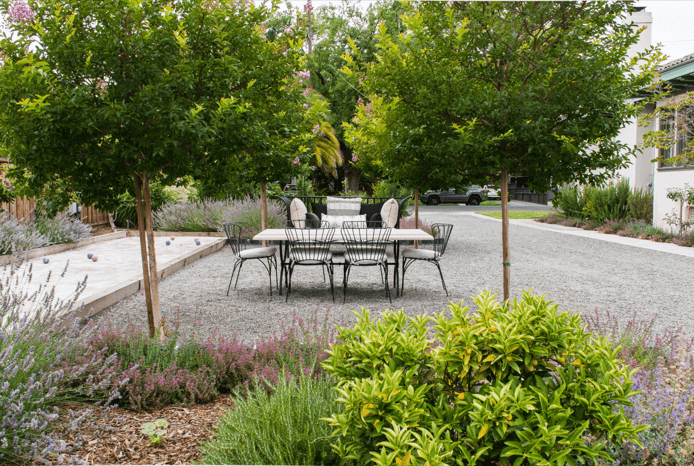
The Smartest Investment: A Design Plan Before You Build
If there’s one place where spending a little saves a lot, it’s design.
A clear garden design plan:
Prevents rework
Supports phased installation
Keeps decisions aligned with your budget
Helps you avoid impulse purchases
Final Thoughts
A successful landscape design renovation isn’t about spending more - it’s about having a plan ahead of time so you can budget accordingly.
When you start with structure, clarity, and a realistic budget, everything else gets easier — and your garden ends up being a place you actually enjoy living in while adding significant value to your home. Win-win!
Enjoy the post? Pin it for later!