Garden Design Ideas for a Beautiful, Low-Maintenance Landscape
Looking for garden design ideas that are beautiful, practical, and realistic to maintain? The most successful gardens aren’t built by chasing trends or copying plant lists, they’re created through smart garden and landscape design decisions that prioritize layout, materials, and long-term function and beauty.
My real-life garden design project shows how a neglected residential landscape was transformed using clear structure, permeable hardscape, and climate-appropriate planting.
While the aesthetic is inspired by Mediterranean gardens (I live in Napa, CA so the climate fits), the design principles apply broadly and can be adapted to any climate and home style.
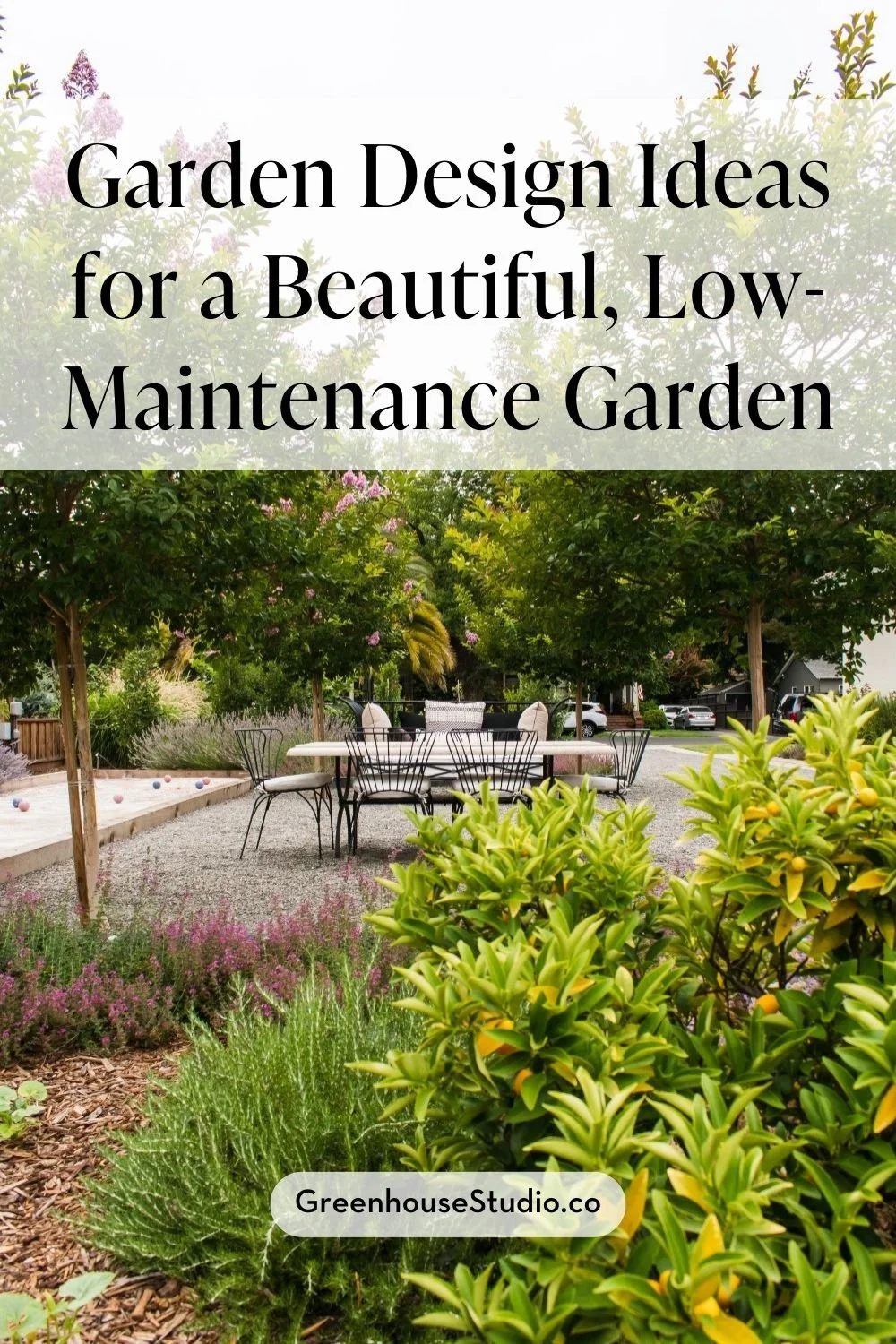
Throughout this post, you’ll see practical garden design ideas in action, including how to organize outdoor spaces, choose low-maintenance materials, and design a landscape that improves with age instead of becoming more work.
If you’re curious about the very first step in the landscape design process, check out this post: The First Step In Designing A Garden.
Garden Design Ideas Used in This Landscape
Rather than treating the garden as decoration, this project approached it as a system. These core garden design ideas shaped the final result and can be applied to many residential landscapes.
1. Start With the Garden Layout, Not the Plants
One of the most common DIY garden design mistakes homeowners make is choosing plants first and hoping everything comes together later. I get it! When it comes to plants, I'm like a kid in a candy store. However, strong landscape design always begins with the overall garden layout.
Sightlines from inside the house, how the space would be used day to day, and long-term maintenance were all considered before a single plant was chosen. That foundation is what allows the garden to feel cohesive, calm, and intentional, rather than pieced together over time.
So I started with the landscape layout. A central axis aligns the garden with the main kitchen window — a place where the garden is viewed every day. That invisible centerline runs through the patio and bocce court, creating balance and symmetry without feeling formal.
Why this works:
Strong geometry makes the garden feel intentional rather than scattered
Views from inside the home are prioritized
Plants and decorative details fall into place much more easily when there's intentional underlying structure.
Strong garden design starts with structure.

Garden design ideas shown in my Mediterranean-inspired, low-maintenance residential landscape located in Napa, California.
Garden design layout showing symmetrical paths, patio seating, and outdoor zones (click to expand). Design | Tina Huffman, Greenhouse Studio. Property base plan | Michalski Design Group
2. Consider Permeable Hardscape Instead of Concrete
Traditional concrete hardscape was intentionally avoided in favor of pea gravel and sand-set stone.
Aesthetically, I love the old world feel of pea gravel. It is perfectly suited to my 100-year-old Spanish-Mediterranean style home in Napa, California.
Pea gravel is used throughout the landscape — for the driveway, patio, and circulation paths — creating visual continuity and flexibility. There’s no sharp distinction between “driveway” and “outdoor living space,” which makes the garden feel larger and more adaptable.
From a landscape design perspective, permeable materials:
Improve drainage
Reduce runoff
Work well in areas with high water tables
Avoid cracking over time that’s inevitable with concrete
Bonus - pea gravel is much less expensive than concrete.
This is a practical garden design idea that balances aesthetics, budget, and durability.
3. Create Outdoor Rooms Without Walls
Instead of one large undefined space, the garden is organized into outdoor rooms:
A dining area near the kitchen
Adjacent seating for gathering and relaxing
A bocce court
Planting beds that define edges and circulation
Defining space through layout and materials before a single plant is planted is one of the most effective garden design ideas for making a landscape feel purposeful and usable.
4. Limit the Plant Palette for a More Professional Look
A restrained plant palette is one of the simplest ways to elevate a garden.
This landscape relies on a mostly green, white, lavender, and soft pink color scheme. Plant groupings are repeated throughout the space.
Repetition creates rhythm and visual calm, while also simplifying maintenance.
The landscape design principles of plant repetition and limited color palette is effective in any garden style.

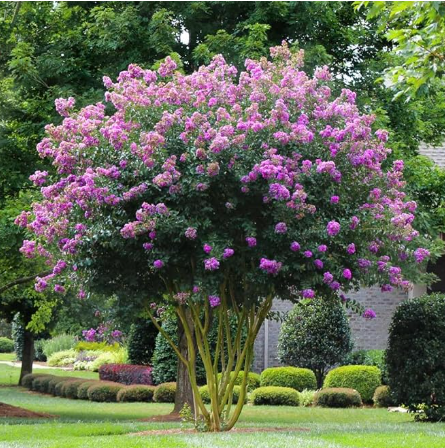
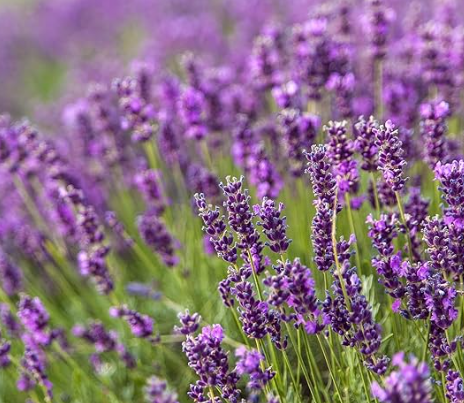
Drought tolerant lavender surrounding the bocce court works well with lavender Muskogee crape myrtles.
Before & After: A Garden Transformation
Before the redesign, the property was dominated by cracked concrete, patchy lawn, and an overgrown assortment of plants that had been languishing for years. A high water table contributed to the deterioration.
After the transformation, the garden is open, functional, and visually calm — anchored by permeable hardscape, defined outdoor spaces, and a cohesive planting plan.

‘Before’ view of the unkempt garden with a large concrete driveway and poor landscape layout.

‘Before view’ of more concrete driveway, a disconnected concrete patio, and grass.

‘Before view’ - our old chicken coop, overgrown raised beds, and part of the patio. The only new element was the fence.
Garden Design Constraints
Design constraints are just what it sounds like - things you have to work around. Whether it’s restrictions from city code, budget, or existing elements you need to work around.
I’ve always argued that having design constraints makes for better projects than carte-blanche projects - it forces you to get creative. The end result is usually better for it.
Here were my main landscape design constraints:
Water permeability - my property has seasonal underground water that floods my basement (like when the sump-pump dies at 11:00 PM on a work night..)
I wanted a permeable surface that allows for water percolation. A permeable surface is better environmentally since it replenishes the aquifer rather than getting routed out to a storm drain.
It also reduces flooding. Urban areas can be 90% or more flood-prone than agricultural or wild land.
Why? Because urban areas are paved. This means water sits on the surface instead of being absorbed by the ground.
Budget - I designed the entire property, but I didn't have all of it installed at this time. This is called project phasing, and it's key to achieving a cohesive design rather than a random piecemeal one.
[Read all about how to budget for a remodel project.]
Materials That Support the Landscape Design
Pea gravel & decomposed granite: permeable, flexible, budget-friendly
Natural stone pavers: sand-set for movement and durability
Metal edging: clean lines that visually disappear
Stone borders and cobbles: subtle contrast without visual clutter
Natural shade structures - shade trees instead of expensive shade structures that age poorly.
These material choices support both the aesthetic and functional goals of the landscape design.

Driveway view “Before” - Cracked concrete due in part to a high water table.

Driveway view “After” - Low-maintenance landscape design using permeable gravel and granite cobbles instead of concrete - both of which will never crack!
Garden Design Idea: Pea Gravel “Hardscape”
Pea gravel and decomposed granite are two of the most common surfaces used in traditional Mediterranean style gardens. Study gardens in Spain, France, Italy etc. and you will see a lot of it (and zero turf grass).
Why? It was a readily available material. Acres of concrete and water-thirsty lawns? Nope. Those places had to conserve water too.
Traditional gardens are a wonderful design reference. Had I gone with concrete, it would have cost much more and I wouldn’t have liked the result nearly as much.
There’s no distinction between driveway, parking, and patio since it’s all pea gravel. This makes the space more flexible - I can set up tables and sip wine in the driveway for a party, and it just feels like its all part of the same garden space.

My garden design features pea gravel throughout so the driveway feels like part of the overall garden space.
Garden Design Idea: Metal Edging
If I can impart one bit of advice it would be to set aside a little extra for metal edging over plastic bender board. There’s no comparison in the finished look. The metal edging disappears whereas plastic bender board jumps out (literally - it has a way of working out of the ground) and frankly, it really cheapens the appearance of the garden.
Garden Design Idea: Stone Pavers
The new walkway and step leading up to the kitchen is silver travertine. Another house in the neighborhood used it for their pool/patio and I fell in love. I’ve never been crazy about the beigey color of most travertine, but this warm silvery-greige color makes all the difference for me.
I also saw silver travertine as a practical choice because I wanted a lighter colored stone but was worried about staining. This stone is plenty “busy” with variable colors and natural imperfections, and so anything that lands on it, from bird poop to berries, has disappeared.

The garden hardscape design included travertine pavers, metal edging, and pea gravel for durability and drainage.
I had the pavers set in sand rather than mortar. Ground water, earthquakes, and teen boys driving over and cracking my lovely pavers are all real possibilities.
I wanted the pavers to be able to shift around a bit rather than crack, and I wanted to be able to easily pop out a paver and replace it if needed.

Garden design details: travertine’s natural variability disguises staining. This pea gravel mixes cool and warm colored stones. Metal edging keeps everything in place but is almost invisible.
For the planter borders I used a combination of dark granite block and metal edging. The dark gray granite blends well with the pea gravel. The border at the driveway’s approach and in front of the garage is silver granite cobbles set in sand.
I didn’t intend to have a dark gray for the planter border and lighter silver for the cobbles. It was due to a purchasing mix up, and of course, I was all worried about it at first. But like so many things, I don’t give it a thought now, and they look great together.

Garden design detail showing silver granite cobbles, pea gravel, and black granite block with metal edging. (Trying hard to ignore my son’s oil splotches from his ‘vintage’ car.)
Garden Design Idea: Natural Shade Structures
Rather than building a pergola or pavilion, shade was created using small, deciduous trees, specifically crape myrtles.
Why? 2 reasons:
I didn’t want to build a shade structure - I rarely think they’re beautiful, they’re very expensive, and they often don’t age well.
Budget - even though I splurged and spent extra to install 36-inch box ‘Muskogee’ crape myrtle trees for dining al fresco, it's still much cheaper than building an overhead shade structure.
This long-term garden design strategy:
Provides shade without heavy construction (and the associated heavy budget)
Softens hardscape
Adds seasonal interest
Ages far better than most built shade structures
The only catch with “natural shade structures”? They require patience! Even with the purchase of larger trees, they won’t provide sufficient shade for some time yet.
In fact, I broke down and bought two shade umbrellas this season. They look great, but it’s been such a windy summer season in Napa this year that they’re often blowing over when open.
I’ve resorted to extra fertilizing and water to encourage faster future shade! So patience is required, but the payoff is a more natural, timeless landscape.

Garden design idea that uses crape myrtle trees as a natural shade structure for the outdoor dining area instead of a built overhead shade structure.
Garden Design Idea: Bocce Court
In the grand scheme of a significant landscape design overhaul, bocce courts don’t cost that much. I live in Napa, CA, a.k.a. Wine Country, so they’re a value-add when well designed and maintained.
(So fun seeing a bunch of gangly teenage boys playing bocce at my twin's high school graduation party - welcome to Napa!)
Space-wise, it could also basically be swapped out for a single-lane in-ground pool but certainly not budget-wise.

Garden design featuring a bocce court integrated into the landscape layout - August 2020 - two months after installation. The plants have grown so much since!

The bocce court is now surrounded by ‘Provence’ lavender.
Planting Design: How to Choose the Right Plants for Your Garden
Choosing plants is often where garden design starts to feel confusing or expensive. It’s easy to get overwhelmed — or to fall in love with everything at the nursery. (I get it - I'm like a kid in a candy shop.)
The goal isn’t to find more types of plants — in fact - it’s the opposite. it’s to make fewer, better decisions that work together over time.
This planting strategy used in this garden can be applied to any climate by focusing on a few simple principles rather than specific plant lists.
Design for Your Local Climate and Site Conditions
Before choosing individual plants, listen to what your garden site is already telling you. Pay attention to:
Your climate and seasonal patterns
Sun and shade throughout the day
Soil type and drainage
Exposure to wind or reflected heat
While my garden draws inspiration from Mediterranean planting design, the real takeaway is climate compatibility. Plants that are well suited to your local conditions healthier, more attractive, and far easier to maintain over time.
My plants were selected for:
Drought tolerance
Seasonal interest
Texture, foliage, and form
Longevity in the local climate
The plant names may change, but the strategy stays the same.

The planting plan includes drought-tolerant Agave medio-picta 'Alba', Wall Germander, ‘Provence’ lavender.

Landscape plantings include wall germander, boule rosemary, ‘Walker’s Low’ cat mint, kumquat citrus, lavender, and a fig. Pandora getting in her usual cameo (cateo?)
Use Plant Repetition to Create Harmony, Unity, Rhythm, and Flow
One of the biggest differences between a professionally designed garden and a DIY garden is plant repetition.
Professional landscape designers rely on repetition to create harmony, unity, rhythm, and flow. When the same plants — or similar colors, textures, and forms — appear in multiple areas, the garden feels connected and intentional rather than chaotic or random.
Without repetition, gardens often end up looking like a collection of individual plant purchases. This “hodge-podge” effect makes it hard for the eye to know where to look, and the space can feel visually noisy or unfinished.
Repetition works because it guides the eye through the landscape.
When a plant, color, or shape reappears, it creates a visual thread that subtly leads visitors from one area of the garden to the next. The result is a space that feels calm, cohesive, and easy to move through.
Plant repetition doesn’t mean everything looks the same. Instead, it means:
Repeating key plants in multiple locations for visual continuity
Echoing similar colors across different beds
Using consistent plant forms or textures to tie spaces together
This approach dramatically reduces decision-making, simplifies maintenance, and makes the garden feel cohesive.
Landscape design Planting Plan (click to expand). Note my heavy use of plant repetition. Design | Tina Huffman, Greenhouse Studio. Property base plan | Michalski Design Group

Garden design plantings here include agaves, two of my Dad’s golden barrel cacti, and Oenothera lindheimeri surrounding a boulder. A sycamore tree and Pennisetum ‘Karly Rose’ line the back.
Full disclosure: I also pushed the envelope of climate-adaptability.⚠️ (Sometimes you just can't help yourself!)
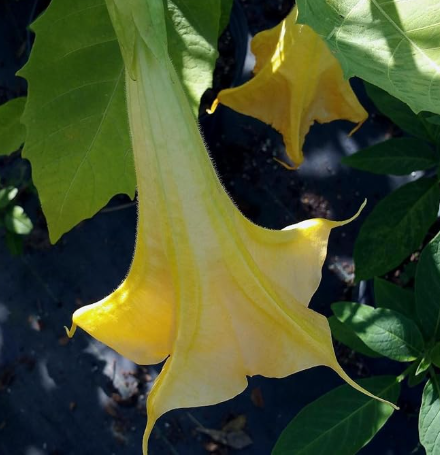
Both the bougainvillea and brugmansia (angel’s trumpet) are frost sensitive. They both survive though because they’re up against a south-facing, inset wall which provides insulation when it freezes.
Both suffer some frost damage though that requires pruning in spring. (Here's that extra maintenance I was referring to that's required when you don't plant for your climate zone!) 🤷🏻♀️
They’re two of my favorite plants from living in southern California though, so it’s fun to be able to grow them here and worth the extra springtime pruning.

Both bougainvillea and angel’s trumpet aren’t frost tolerant but survive next to a south-facing wall. Rock purslane succulents (bottom right) haven’t yet opened their fuchsia flowers for the day.

Who can resist Brugmansia ‘Charles Grimaldi’ (aka Yellow Angel’s Trumpet)? Not me! Their pendulous blooms smell divine at night, but beware - these plants have their natural defenses - all parts are poisonous!
SHOP THE LOOK (Amazon affiliate links)
Designer’s Perspective: Why This Garden Works
As a landscape designer with formal education in horticulture and landscape architecture, I approach garden design as a system — not a collection of plants.
This garden works because:
The layout supports daily use and aesthetics
Materials were chosen for beauty, budget, and long-term performance
Plants are suited to the site and climate
Structure was prioritized before decoration
These principles are climate and environment agnostic - they’ll work anywhere.
Want Help Applying These Garden Design Ideas to Your Own Space?
If you’re overwhelmed by garden design decisions, get clarity on your landscape’s needs first.
🌳 Download my free Garden Audit to see your space through a designer’s eyes.
It helps you identify what’s working, what’s holding your garden back, and what to focus on first — before spending money or planting anything.
Garden Design Ideas: Frequently Asked Questions
What should beginners focus on first when designing a garden?
Beginners should start with the garden layout, not the plants. Defining paths, outdoor rooms, and how the space will be used creates a strong foundation.
Once the structure is in place - defining paths, outdoor rooms, and circulation (what I like to call the “garden bones” 🦴) choosing plants becomes a lot easier and results in a more cohesive design.
How do I design a low-maintenance garden?
Low-maintenance garden design relies on working with materials and plants appropriate to your climate zone and your specific site.
For example, if you plant tropical plants in a cold environment, you're going to end up replacing plants frequently because they will die back due to frost, costing you extra time, money, and effort.
Do these garden design principles work in other locations?
Yes. These garden design principles are universal, not location-specific. They focus on strong layout, defined outdoor rooms, permeable materials, restrained plant palettes, and designing for long-term ease — ideas that apply to residential gardens almost anywhere.
My garden is located in Napa, California, which influenced both plant and material choices. However, the core design decisions — organizing space before choosing plants, using materials that age well, and prioritizing function alongside beauty are easily adapted to different regions and home styles.
With thoughtful plant and material selection, these garden design ideas translate far beyond one location to create landscapes that are cohesive, low-maintenance, and enjoyable to live with over time.
How can I tell what’s not working in my garden?
Look for unclear paths, awkward spaces, plants that feel out of scale, or areas that require constant maintenance. A garden audit can help you identify what to fix first.
🌳 Download my free Garden Audit to get started.
A garden is never finished - it evolves over time. With a strong design foundation, your garden’s evolution becomes a pleasure rather than a frustration. 🌷💕
If you have any questions or comments, please drop me a note below. Be sure to check back for my response (I always respond) since no notification is sent.