Garden Planning: How to Plan a Garden That Actually Works
Garden planning is where you clarify how your garden should function, how the outdoor space should be organized, and what constraints you’re working with.
It’s the decision-making stage that happens before anything else - design sketches, layouts, and certainly before plant selection. Taking the time to go through the planning process ensures the garden actually works in real life, and the final result is a garden you love.
The only catch? This is the part most people skip.
Garden enthusiasts and homeowners alike often jump straight to inspiration photos, plant shopping, and patio furniture. The problem is that without a planning framework, those choices aren’t grounded by a purpose they can be held up against for evaluation. They’re just individual decisions stacked on top of one another, which is why gardens so often feel disjointed.
Planning gives your garden a backbone. It creates alignment between how the space looks, how it’s used, and how it’s built over time.
If garden design is what your garden becomes, planning is how you decide what it should be in the first place. So let's get to it.
Garden Planning vs. Garden Design (Why People Confuse Them)
Garden planning and garden design are closely related, but they’re not the same thing. Planning focuses on thinking and prioritizing.
Here's where you should focus:
How you want to use the space
What needs to happen first
What constraints matter most
What decisions must be made before anything is drawn or planted
Garden design focuses on execution and expression:
Translating those decisions into layout, structure, and form
Creating visual cohesion
Refining proportions, relationships, and flow
Online, these terms are often used interchangeably, which creates confusion. Many articles labeled “garden planning” are actually planting guides or seasonal checklists. Many “garden design” resources jump straight to style or inspiration without addressing the underlying decisions that make a design successful.
The result is that gardeners and homeowners assume planning is optional—or that it’s something professionals do behind the scenes.
In reality, planning is the most accessible and empowering part of the process. It’s the stage where clarity replaces guesswork.

Why Skipping Garden Planning Leads to Less Successful Gardens
When planning is skipped, the symptoms show up quickly.
Garden elements like paths, patios, and plants are out of scale for the overall space. Focal points were never planned, so the eye doesn't know where to rest. Plants either struggle to grow or quickly outgrow their locations. Money gets spent fixing problems that could have been avoided with better upfront decisions.
Most people assume these issues are caused by not having a “designer’s eye”. The truth is, garden planning and design structured, learnable process, and with the right framework, anyone can be successful.
No “designer's eye” required.
Garden planning gives you a set of criteria by which each potential design element is held up to for evaluation.
Without planning, choices get made in isolation with no consideration of how it will contribute to the overall purpose(s) of the garden.
For example:
Paving materials are chosen that don't relate to the garden style, color scheme, or home.
Plants are chosen individually - without considering how the plant will contribute throughout the 4 seasons.
Outdoor seating areas are installed without thinking about shade to make the space comfortable for people.
Planning doesn’t eliminate mistakes, but it does reduce costly ones and makes the garden design process intentional rather than reactive.
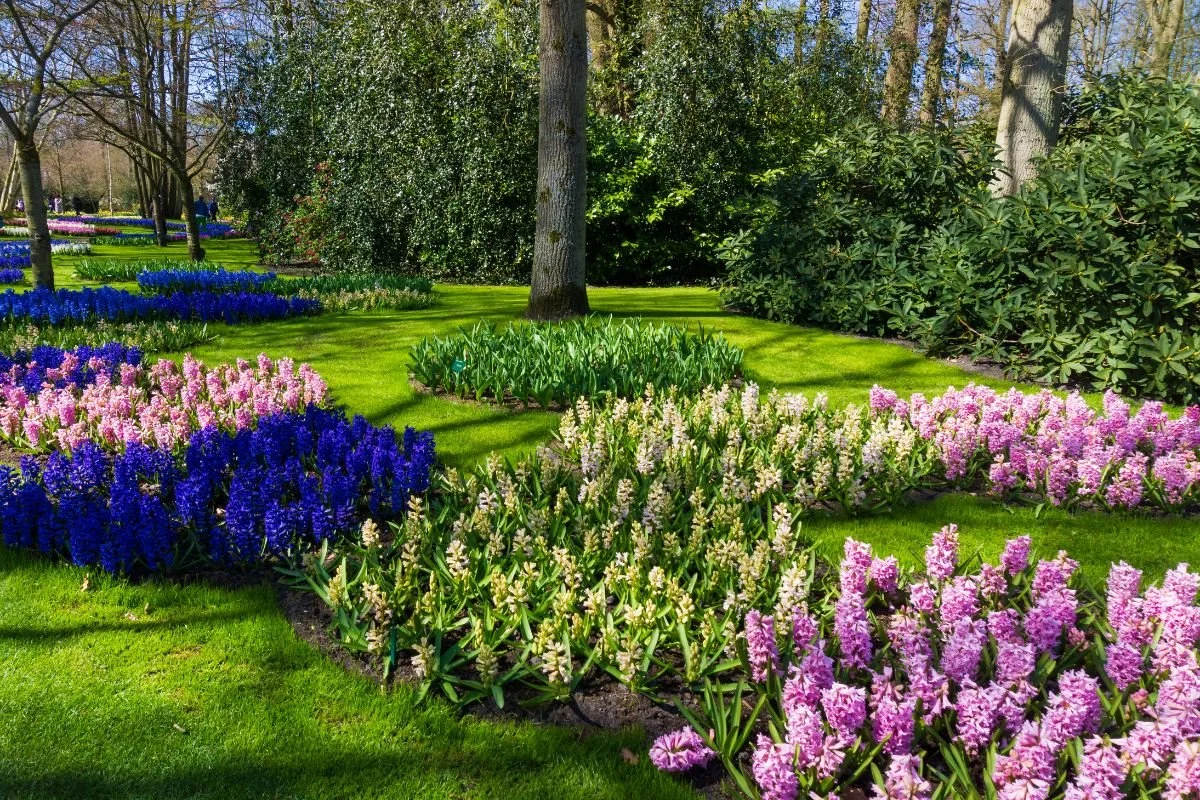
A planting bed designed around bulbs can look spectacular for a short window, but without garden planning, the space lacks structure and visual interest for the rest of the year.
The Garden Planning Process (Big-Picture Overview)
Garden planning isn’t a checklist and it isn’t a one-day task. It’s a sequence of decisions that build on one another.
What matters most is order.
When decisions are made in the wrong sequence—style before function, plants before structure, budget after installation—the garden has to work harder to succeed. When decisions are made in the right order, everything downstream becomes simpler.
At a high level, garden planning answers five essential questions:
How will the garden be used?
How is the space organized?
What overall style direction holds it together?
What constraints must be respected?
How will it be built; all at once or over time?
These decisions apply to every garden, regardless of size or style. Skipping any of them creates friction later on.

The 5 Core Garden Planning Decisions (In the Correct Order)
1. How Will the Garden be Used
Every successful garden starts with use, not appearance.
Before thinking about plants or style, you need to understand how the garden fits into your daily life.
Is it a place you pass through, a place you gather, or a place you look at from inside the house? Do you want quiet, passive activity, structured recreation, or flexibility for both?
Factors to consider are:
Who is outside and how often? Adults, children, pets?
How will those in the garden be using it?
How much maintenance realistically fits your lifestyle and budget?
When garden function is clear, design decisions stop feeling abstract. Moving forward with the garden design feels much easier.
2. How the Garden Is Organized
Landscape layout is the framework that holds the garden together.
This includes paths, edges, hard surfaces, and the way spaces connect to one another. Layout determines how you move through the garden, where people will gather, and how the garden space relates to the house or structures.
Without a thoughtful, intentional landscape layout, a gardens will feel disjointed - even if the plants in it are beautiful. On the other hand, with a strong layout, even simple plantings feel intentional.
The planning process begins to shape layout, but without getting into details yet. The goal at this point is clarity, not precision.
3. The Overall Garden Style Direction
Style is much more than identifying and naming a particular style (“cottage gardens”) or trying to achieve a look found in a Pinterest image. The main contribution of a garden style is that it creates consistency.
A clear style direction helps you make hundreds of small decisions without constantly second-guessing yourself. It creates cohesion across materials, forms, and planting choices.
It's especially helpful when a garden is built in phases. Having an overall style direction allows you to easily start up the project again because you have a set of design parameters to check your decisions against.
When style is undefined, every decision is challenging because you have no basis for making a decision. There's no set of predetermined parameters or constraints that you can hold your decision up to for proper evaluation of whether or not a particular design element makes sense.
When the overall garden style is clear, you have a process for making decisions, so restraint becomes easier.
For example, if you’ve decided upon a color palette of sage green, lavender, and white, with yellow as an accent - then it becomes easier to eliminate that tempting new David Austin red rose.
A garden style is not about locking yourself into a look forever. It’s about choosing a direction that gives the garden a recognizable identity.
It makes planning your garden easier because you have criteria for evaluating the many decisions that have to be made along the way.
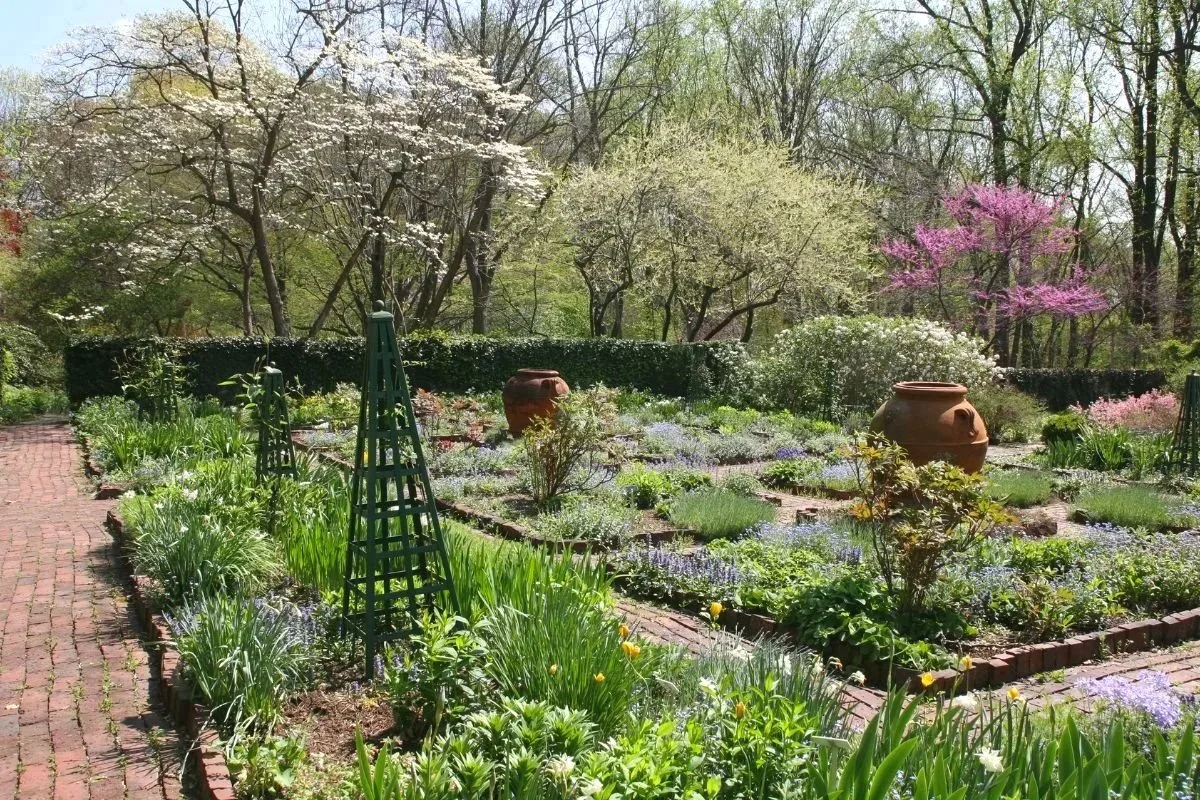
Formal geometry and clear circulation paths are the result of early garden planning and style decisions about structure, movement, and use.
4. Site Conditions and Constraints
Every garden has constraints. Planning is where you acknowledge them instead of fighting them.
Sun exposure, drainage patterns, slopes, existing trees, neighboring structures - these factors don’t dictate design, but they do inform it. When they’re considered early, they guide smarter decisions. When they’re ignored, they become future problems.
Some friendly advice: try not to view a constraint as a negative. Constraints make decision-making easier. They force you to come up with creative alternatives to work within the constraint, whether it’s a budget (most common), a quirky building element, or even the dreaded HOA.
In my professional experience, project end results are often better due to a constraint because it forced the creative juices to get flowing - even if it didn't seem like a positive at the start.
This stage of planning is about understanding what the site will and won’t support so expectations stay realistic and informed decisions can be made that will help ensure a successful project.
5. Budget and Phasing
Budget isn’t a limitation—it’s a planning tool. As discussed in the previous paragraph - it's just another constraint. And here's where phasing comes in: a well-planned garden doesn’t have to be built all at once.
Phasing allows you to prioritize different parts of the project. For example, the patio and pathways are built out first and adjacent beds planted, but hillside retaining walls come a year later.
When budget is addressed early in the garden plan, decisions align with reality. When it’s postponed, compromises happen that can end up being quite expensive.
A common (and costly) example:
If those concrete walkways are installed at an earlier phase than lighting, make sure the lighting is part of the budget and plan so pipes and wiring are placed underneath at the time the concrete is poured. Otherwise, running the wiring for those lights later is going to be very costly and disruptive.
Planning for phasing gives you flexibility and control, instead of forcing rushed choices that can turn into costly choices.
What Garden Design Planning Is Not
Garden planning isn’t a planting plan, a shopping list, or a seasonal task you repeat every year. It’s also not something you do after buying materials or plants.
Planning is the foundation that supports everything else. When it’s done well, design becomes more clear, and the project will be more successful.

Do You Need a Professional to Plan a Garden?
Not necessarily.
Many gardeners and homeowners can plan their own gardens effectively - especially when they learn the basics of garden design so they understand what to prioritize and in what order. Planning is about thinking clearly, not making perfect choices.
Professional landscape design help can be especially valuable when the site is complex and/or the scale is large. Whether you do it yourself or with professional guidance, what matters most is that planning happens before anything gets built, installed, or planted.
How Garden Planning Connects to Layout and Design
Planning sets the direction. Layout organizes space. Design refines and expresses it.
When planning is complete, layout decisions become easier and more confident. Design choices feel intentional instead of decorative.
This progression—planning first, then layout, then design—is what turns ideas into a cohesive garden instead of a collection of parts.
Start Planning Your Garden (Next Steps)
If your garden feels unfinished, overwhelming, or harder than it should be, planning is where clarity begins.
You don’t need more inspiration or more plants. You need a clearer framework for decision-making.
Once that framework is in place, everything else falls into line.
If you already have a garden and something about it feels off, the most useful next step isn’t redesigning or replanting — it’s identifying which planning decisions were missed or made out of order.
I created a simple Garden Audit that walks you through evaluating your space in about ten minutes, so you can pinpoint where the breakdown is before making changes.